Over the summer, NYSG supported three law and policy students through the New York Coastal Resilience Law and Policy Fellowship, where they gained legal experience by tackling real-life policy challenges in coastal communities.
— By Sumayyah Uddin, NYSG's Science Writer
Contact:
Katherine Bunting-Howarth, NYSG Associate Director, P: 607-255-2832, E: keb264@cornell.edu
Ithaca, NY, September 17, 2026 - New York Sea Grant (NYSG) supported three law and policy students through the New York Coastal Resilience Law and Policy Fellowship in 2026. This fellowship provides students with the opportunity to apply legal skills to real-life policy challenges, supporting coastal communities while providing them with law and policy information.
This year, students were selected from City University of New York (CUNY) School of Law and the Elisabeth Haub School of Law at Pace University. They partnered with NYSG to serve local communities, working with their mentors to develop projects around stormwater runoff mitigation, legal liabilities of dam ownership, and traceability compliance guides for the seafood industry.
Sera Guven
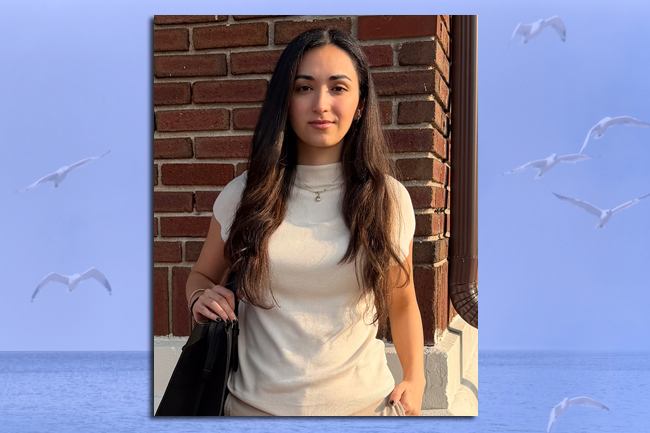
Credit: Sera Guven
Sera Selin Guven is a rising third-year student at the CUNY School of Law, where she is considering pursuing environmental law. She has a degree in environmental science and policy from UC Irvine, and has done legal internships with the Legal Aid Society, Juvenile Rights Practice, and the New York State Department of Environmental Conservation (Region 2). Guven is passionate about environmental justice, sustainability, and wildlife protection.
For her fellowship, Guven worked with New York Sea Grant on a project to develop guidance and recommendations to incentivize private properties to mitigate stormwater runoff, with guidance from mentor Sarah Schaefer-Brown (NYSG, Long Island Sound Partnership Sustainable & Resilient Communities Extension Professional, Nassau County). Sera worked closely with a mentor team that included representatives from the Nassau County Soil and Water Conservation District, Town of Hempstead, Hempstead Harbor Protection Committee, and NYSDEC.
Runoff — excess water produced by precipitation — poses many problems to coastal communities. “The excess water that flows off of impermeable surfaces picks up pollutants, oil, sediment, and pretty much anything along its path,” Guven explained. This untreated runoff then enters local waterways, where “it can degrade water quality, aquatic life, and cause flooding and the erosion of stream banks.”
“For this project, I interviewed municipalities (such as the Nassau County Department of Public Works, Suffolk County, and Oyster Bay) to learn about barriers to stormwater code changes and their interest in pursuing them,” Guven said. Part of what she learned from doing so is that the foundation of stormwater mitigation is public education and outreach, as she noted that “communities cannot act on what they don't understand.”
Guven helped work towards increasing public knowledge by producing materials to educate and inform local communities, including a general summary fact sheet of why these incentive programs and code changes are important and an accompanying PowerPoint presentation; a spreadsheet to track codes and notes by municipality; a consolidated resource list; and sample stormwater management code to help incentivize private property owners to mitigate stormwater runoff with green infrastructure.
“How would municipalities benefit from incentivizing mitigation?” Guven said, reflecting on her work this summer. “As I mentioned, [offering incentives] could help improve aquatic life, improve water quality, lower infrastructure strain, increase climate resilience, and reduce flooding, which we're seeing with major storm events now.”
Krissadele Michael
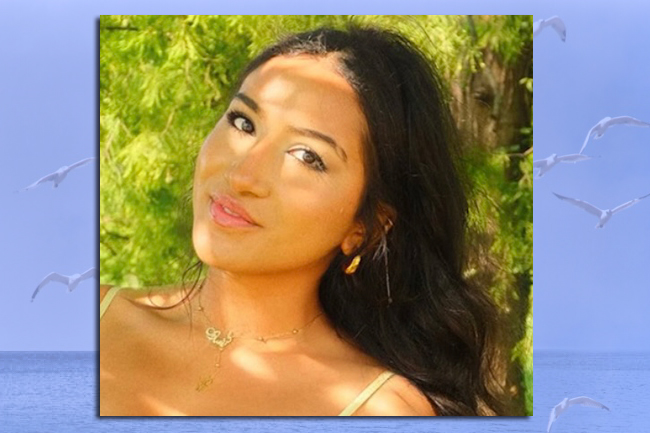
Credit: Krissadele Michael
Krissadele Michael is an incoming second-year student at Pace University’s Elisabeth Haub School of Law with an interest in environmental and policy work. Originally from New Jersey, Michael has been living in New York City for the past six years. While earning a bachelor’s degree in political science at Pace University, she worked on a research project exploring the policy gaps and environmental impacts of the textile industry. She has also worked as a congressional intern, which honed her interest in working with local communities and policy.
Over the summer, Michael worked with mentor Roy Widrig (NYSG, Great Lakes Coastal Processes and Hazards Specialist) on the legal liabilities of dam ownership in New York State, including relevant statutory and regulatory obligations as well as common law tort claims like negligence, trespass, and nuisance.
“Section 15 of New York State’s Environmental Conservation Law states that dam owners must operate and maintain dams in safe conditions,” Michael explained; as part of her fellowship, she researched the legal reasoning behind common problems that might face dam owners, as well as the repercussions.
“This [Section 15] is an affirmative statutory duty that all dam owners must comply with regardless of whether or not they're aware of a dam in their property — knowledge is not a requirement in order for you to be compliant,” Michael said. She further explained that the statute requires that owners comply with the New York State Department of Environmental Conservation (NYSDEC) safety regulations, with those who fail to comply subject to civil penalties; the NYSDEC also has the authority to oversee and issue orders pertaining to dam safety.
Though there are exceptions for willful or malicious acts, Michael emphasized that “a dam owner does not have a responsibility to mitigate harm.” However, there are certain actions that do open them up to liability. Examples of issues that dam owners might be liable for include negligence; interfering with the natural flow of water; intentional acts, like diverting water to cause harm to others or their property; and nuisance, or obstruction to the use and enjoyment of the land. Dam owners with questions should consult legal counsel.
In general, Michael concluded that “New York seems to hold the definitions of things in a much more strict capacity” — which means that dam owners need to be familiar with the laws and liabilities so that they can keep their property compliant.
Leo McGuinness
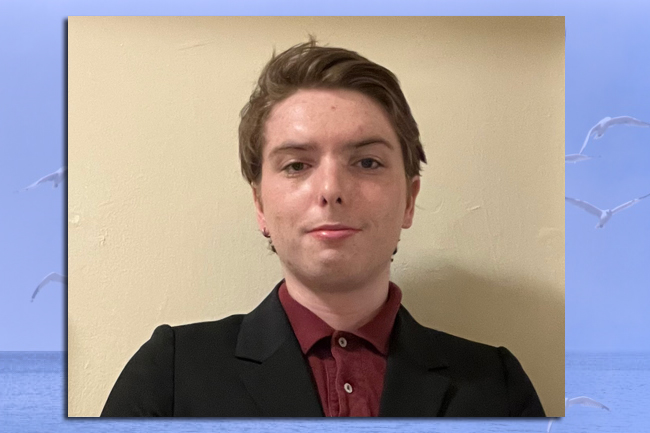
Credit: Leo McGuinness
Leo McGuinness is a third-year J.D. candidate at City University of New York (CUNY) School of Law, with interest in environmental and administrative law, land-use regulation, and public-interest transactional practice. His past legal work has included representing rural tenants in South Dakota and researching workers’ rights in Mississippi, and, this fall, he will continue working alongside community organizations through CUNY’s Community and Economic Development Clinic.
Supervised by Michael Ciaramella (NYSG, Seafood Safety and Technology Specialist), McGuinness spent his summer fellowship as a Coastal Resilience Law and Policy Fellow developing a practical, scenario-based compliance guide for New York’s seafood industry under the FDA’s Food Traceability Rule (FSMA 204).
“The rule aims to speed up outbreak response through standardized recordkeeping, but it was written largely with produce in mind, and its structure does not map neatly onto seafood,” McGuinness explained. “That leaves wild-harvest and aquaculture operators with real uncertainty about how its exemptions, Critical Tracking Events, and traceability lot codes apply across their supply chains.”
To find out what people in the seafood industry truly needed, he consulted specialists and businesses from a variety of roles within New York’s seafood network: Cornell Cooperative Extension’s fisheries team, the Fulton Fish Market Cooperative, and the National Fisheries Institute.
“Their concerns and real situations became the scenarios the guide examines,” he said. “I researched each scenario against the regulation and FDA guidance, then organized the analysis into a source-linked Excel workbook covering wild-harvest, aquaculture, and downstream operations. A user can find a scenario resembling their own and see which requirements may apply, the legal authority behind the analysis, and whether the answer is settled or still open.”
McGuiness noted what happened to unresolved scenarios. “We brought [them] directly to the FDA to test our working interpretations against the agency's positions and pinpoint where the industry still needs clarity. We also put forth a multitude of different hypothetical scenarios, which allowed FDA to track across how we interpreted the rule, how we put it in our own words, and how we imagined it would act given this specific scenario.”
McGuinness also developed a more experimental version of the guide — an interactive version he describes as a “hypothetical website.” Having different versions of the guide aims at capturing the attention of different types of audience members, regardless of which part of the industry they’re coming from.
More Info: New York Sea Grant
New York Sea Grant (NYSG) is a university-based, statewide Federal-State collaboration between the State University of New York (SUNY), Cornell University, and the National Oceanic and Atmospheric Administration (NOAA). It is one of 34 university-based programs that connects research, extension, and education with the needs of coastal communities, environments, and economies through NOAA.
Since 1971, NYSG has supported science-based solutions for a wide range of water-related challenges and opportunities across the state. Through NYSG’s efforts, university scientists and extension specialists help develop and transfer science and technical information to educational institutions, businesses, agencies, and industries; federal, state and local governments; the media; and the interested public. The program is administratively based at Stony Brook University (SBU) and Cornell's College of Agriculture and Life Sciences (CALS).
NYSG historically leverages on average a 5.5-fold return on each invested federal dollar, annually. The State benefits from this, as these resources are invested in Sea Grant staff and their work in communities right here in New York.
New York Sea Grant, one of the largest of the state Sea Grant programs, maintains Great Lakes offices at Cornell University, SUNY Buffalo, Rochester Institute of Technology, SUNY Oswego, the Wayne County Cooperative Extension office in Newark, and in Watertown. In the State's marine waters, NYSG has offices at Stony Brook University and with Cornell Cooperative Extension of Nassau County on Long Island, in Queens, at Brooklyn College, with Cornell Cooperative Extension in NYC, in Bronx, with Cornell Cooperative Extension of Ulster County in Kingston, and with Cornell Cooperative Extension of Westchester County in Elmsford.
Established in 1966, the National Oceanic and Atmospheric Administration (NOAA)’s National Sea Grant College Program promotes the informed stewardship of coastal resources in 34 joint federal/state university-based programs in every U.S. coastal state (marine and Great Lakes) and Puerto Rico. The Sea Grant model has also inspired similar projects in the Pacific region, Korea and Indonesia.
For updates on Sea Grant activities: www.nyseagrant.org, follow us on social media (Facebook, Twitter/X, Instagram, Bluesky, LinkedIn, and YouTube). NYSG offers a free e-list sign up via www.nyseagrant.org/nycoastlines for its flagship publication, NY Coastlines/Currents, which it publishes quarterly.